Which Financing Option Is Right for Your Business or Personal Financial Needs?
Whether you’re launching a startup, expanding an existing business, purchasing equipment, managing unexpected expenses, or funding a major life event, choosing the right type of financing is one of the most important financial decisions you’ll make.
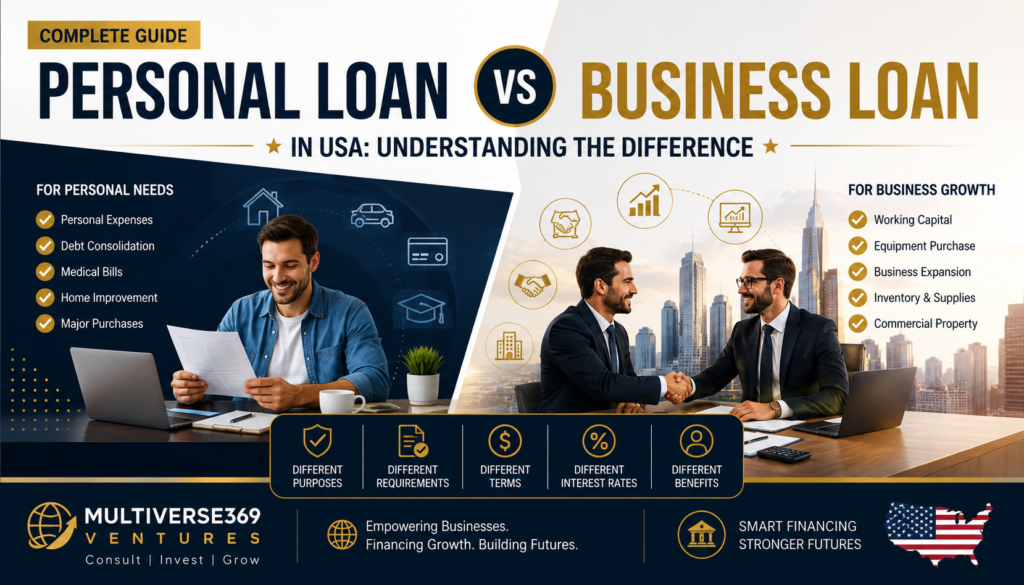
In the United States, borrowers generally have two common financing options: Personal Loans and Business Loans. While both provide access to capital, they are designed for very different purposes and come with distinct eligibility requirements, repayment terms, interest rates, tax considerations, and legal obligations.
Many entrepreneurs—especially first-time business owners—often wonder:
- Can I use a personal loan to start a business?
- Should I apply for a business loan instead?
- Which option has lower interest rates?
- Which loan is easier to qualify for?
- Will a business loan affect my personal credit?
- Which financing solution is better for long-term business growth?
The answers depend on your financial goals, business stage, credit profile, and intended use of the funds.
Using the wrong financing option can lead to unnecessary debt, cash flow challenges, or missed growth opportunities. Choosing the right loan, however, can provide the financial flexibility needed to achieve your objectives while protecting your long-term financial health.
At Multiverse369 Ventures, we help startups, entrepreneurs, and established businesses across the United States understand their financing options and connect with trusted lenders, banks, financial institutions, and funding partners. In this comprehensive guide, we’ll explain the differences between personal and business loans, compare their advantages and disadvantages, discuss qualification requirements, and help you determine which financing option best suits your needs.
Understanding Personal Loans
A personal loan is money borrowed by an individual for personal use. Unlike business loans, approval is primarily based on the borrower’s personal financial profile rather than business performance.
Personal loans are commonly used for:
- Home improvements
- Medical expenses
- Debt consolidation
- Education expenses
- Weddings
- Major purchases
- Emergency expenses
In some cases, entrepreneurs also use personal loans to finance a new business, particularly during the early stages when the company has limited operating history.
What Is a Business Loan?
A business loan is financing specifically designed to support business activities.
Funds are intended for legitimate business purposes, including:
- Working capital
- Inventory purchases
- Equipment financing
- Commercial real estate
- Hiring employees
- Marketing campaigns
- Business expansion
- Technology upgrades
- Franchise purchases
- Cash flow management
Business loans are generally issued to companies rather than individuals, although lenders may still evaluate the owner’s personal financial background.
Personal Loan vs Business Loan: Key Differences
| Feature | Personal Loan | Business Loan |
|---|---|---|
| Primary Purpose | Personal expenses | Business operations and growth |
| Borrower | Individual | Business entity (or business owner) |
| Approval Basis | Personal credit and income | Business revenue, credit, cash flow, and sometimes personal guarantees |
| Loan Amounts | Typically smaller | Often larger, depending on eligibility |
| Use of Funds | Broad personal uses; business use may be possible depending on lender terms | Business-related purposes |
| Documentation | Personal financial documents | Business and financial records |
| Tax Treatment | Interest is generally not deductible for personal use | Business loan interest may be deductible in many cases (consult a tax professional) |
| Repayment Source | Personal income | Business revenue |
When a Personal Loan May Make Sense
There are situations where a personal loan can be an appropriate option for entrepreneurs.
Examples include:
Starting a Small Home-Based Business
If you’re launching a consulting practice or online business with relatively low startup costs, a personal loan may provide enough capital to get started.
Limited Business History
Many new businesses lack the operating history required for traditional business financing.
A personal loan may be easier to obtain if you have strong personal credit.
Small Capital Requirement
If your funding needs are modest, a personal loan may meet your short-term requirements without the complexity of business financing.
When a Business Loan Is the Better Choice
Business loans are generally more suitable when financing is directly tied to business growth.
Examples include:
Business Expansion
Opening additional locations
Hiring employees
Increasing inventory
Expanding operations
Purchasing Equipment
Manufacturing equipment
Commercial vehicles
Technology infrastructure
Medical equipment
Restaurant equipment
Working Capital
Managing seasonal cash flow
Supplier payments
Payroll
Marketing
Operational expenses
Commercial Property
Purchasing office buildings
Warehouses
Retail space
Industrial facilities
Advantages of Personal Loans
Personal loans offer several benefits:
Faster Approval
Many personal loans have streamlined application processes, which can result in quicker decisions.
Simpler Documentation
Borrowers typically provide:
- Income verification
- Identification
- Employment information
- Credit history
Business financial statements are usually not required.
Fixed Monthly Payments
Most personal loans have predictable repayment schedules, making budgeting easier.
Suitable for New Entrepreneurs
Individuals with strong personal credit may qualify even if their business has limited operating history.
Advantages of Business Loans
Business loans provide benefits specifically designed for companies.
Higher Borrowing Limits
Businesses often require larger amounts of capital than personal loans typically provide.
Business Credit Development
Responsible repayment can help establish or strengthen the business’s credit profile.
Supports Long-Term Growth
Business loans are designed for expansion, equipment, inventory, hiring, and operational needs.
Financing Tailored to Business Needs
Many lenders offer specialized products such as:
- SBA Loans
- Equipment Financing
- Commercial Real Estate Loans
- Bridge Loans
- Lines of Credit
- Invoice Financing
Potential Drawbacks of Personal Loans
Before using a personal loan for business purposes, consider the following:
Personal Liability
You are personally responsible for repayment, regardless of how the business performs.
Lower Borrowing Capacity
Personal loans may not provide sufficient funding for larger business investments.
Impact on Personal Credit
Missed or late payments can affect your personal credit score.
Limited Business Benefits
Personal loans do not typically contribute to building business credit.
Potential Drawbacks of Business Loans
Business financing also has considerations.
More Documentation
Lenders may request:
- Financial statements
- Tax returns
- Business licenses
- Cash flow reports
- Business plans
- Bank statements
Longer Approval Process
Some business loans require additional underwriting and review.
Qualification Requirements
Businesses with limited revenue or operating history may have fewer financing options.
Which Loan Is Easier to Qualify For?
The answer depends on your circumstances.
A personal loan may be easier if:
- You have excellent personal credit.
- Your business is new.
- You need a relatively small amount.
A business loan may be easier if:
- Your company has consistent revenue.
- You have several years of operating history.
- You maintain accurate financial records.
- Your business demonstrates strong cash flow.
Understanding Credit Requirements
Credit plays an important role in both loan types.
For personal loans, lenders evaluate:
- Credit score
- Income
- Employment
- Existing debt
- Payment history
For business loans, lenders may also consider:
- Business credit history
- Annual revenue
- Profitability
- Time in business
- Industry risk
- Personal guarantees (for some loan types)
Can You Use a Personal Loan for Business?
In some cases, yes—but borrowers should review the lender’s terms and conditions carefully.
Many entrepreneurs use personal savings or personal financing during the early stages of a business.
However, as a company grows, separating personal and business finances is generally considered a best practice.
Maintaining separate financial accounts improves accounting, tax reporting, and financial management.
Popular Business Loan Options in the USA
Business owners have access to several financing solutions, including:
- SBA Loans
- Bridge Loans
- Business Lines of Credit
- Equipment Financing
- Commercial Real Estate Loans
- Invoice Financing
- Working Capital Loans
- Merchant Cash Advances
- Franchise Financing
- Startup Business Loans
Each product serves different business objectives.
Questions to Ask Before Choosing a Loan
Before applying, consider the following:
Why do you need financing?
Expansion?
Inventory?
Equipment?
Working capital?
Personal expenses?
How much capital is required?
Avoid borrowing more than necessary.
How quickly do you need funding?
Some financing solutions are faster than others.
What repayment amount fits your budget?
Your monthly obligations should align with your income or business cash flow.
Do you qualify?
Understanding lender requirements helps avoid unnecessary applications.
Tips for Improving Loan Approval Chances
Whether applying for a personal or business loan, preparation matters.
Consider the following:
- Review your credit reports.
- Reduce unnecessary debt.
- Organize financial documents.
- Prepare a detailed business plan.
- Maintain accurate bookkeeping.
- Demonstrate stable income or business revenue.
- Clearly explain how funds will be used.
Strong preparation can improve lender confidence.
Common Mistakes to Avoid
Many borrowers make avoidable financing mistakes.
These include:
- Borrowing without a repayment strategy
- Mixing personal and business finances
- Applying for more financing than needed
- Ignoring loan terms and fees
- Failing to compare multiple lenders
- Underestimating the importance of cash flow
Taking time to evaluate your options can help you choose financing that supports long-term success.
How Multiverse369 Ventures Helps Businesses Find the Right Financing
Choosing the right loan can be challenging, especially with the wide range of financing products available in the U.S. market.
At Multiverse369 Ventures, we work with entrepreneurs, startups, SMEs, real estate investors, and established businesses to identify financing solutions that align with their goals.
Our advisory services include:
- Personal Loan Guidance
- Business Loan Assistance
- SBA Loan Advisory
- Bridge Financing
- Expansion Capital
- Startup Funding
- Seed Funding
- Commercial Loan Support
- Financial Consulting
- Business Strategy
- Investor Readiness
Through our network of banks, financial institutions, NBFC partners, and private funding sources, we help businesses navigate financing options with confidence and clarity.
Frequently Asked Questions
Can I use a personal loan to start a business?
In some cases, yes. However, borrowers should review lender terms carefully and consider whether business financing may be more appropriate as the company grows.
Which loan usually has larger borrowing limits?
Business loans often provide higher funding amounts, depending on eligibility and lender requirements.
Will a business loan affect my personal credit?
It can, particularly if a personal guarantee is required or if the lender reports repayment activity to consumer credit bureaus. Policies vary by lender.
Which option is better for long-term business growth?
For established business needs such as expansion, equipment, inventory, or working capital, a business loan is generally better suited because it is specifically designed for commercial purposes.
Final Thoughts
Personal loans and business loans each serve valuable purposes, but they are not interchangeable. A personal loan can be a practical solution for individuals with strong credit who need modest funding or are launching a small business. A business loan, however, is generally the more appropriate choice for financing business operations, expansion, equipment, inventory, or long-term growth.
The best financing decision depends on your unique circumstances, including your credit profile, business stage, funding requirements, repayment capacity, and future goals. Taking the time to understand these differences can help you avoid unnecessary financial risk and choose a solution that supports sustainable success.
At Multiverse369 Ventures, we believe financing should empower growth—not create obstacles. Our experienced consultants help businesses across the United States evaluate financing options, prepare loan applications, and connect with trusted lending partners. Whether you’re considering a personal loan, business loan, bridge financing, or expansion capital, our team is here to help you make informed decisions with confidence.
The right financing is more than access to capital—it is a strategic investment in your business’s future.